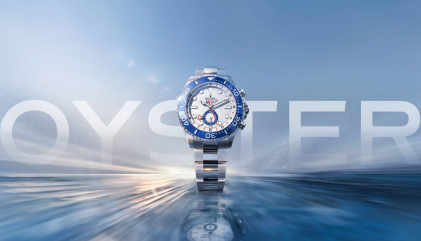

A few days before Watches and Wonders, Rolex starts dropping hints about its novelties by posting teasers on its Instagram handle, and the whole industry begins decoding them right away. Since the brand’s iconic Oyster Perpetual is turning 100 this year, we knew there would be something grand to mark the occasion. Now that the brand’s novelties have been unveiled, that expectation has proven true. There is a plethora of novelties: With four new Oyster Perpetual models celebrating the milestone, a new Datejust model, a Yacht-Master II, a new Rolex Cosmograph Daytona, and a Day-date.
Rolex Oyster Perpetual
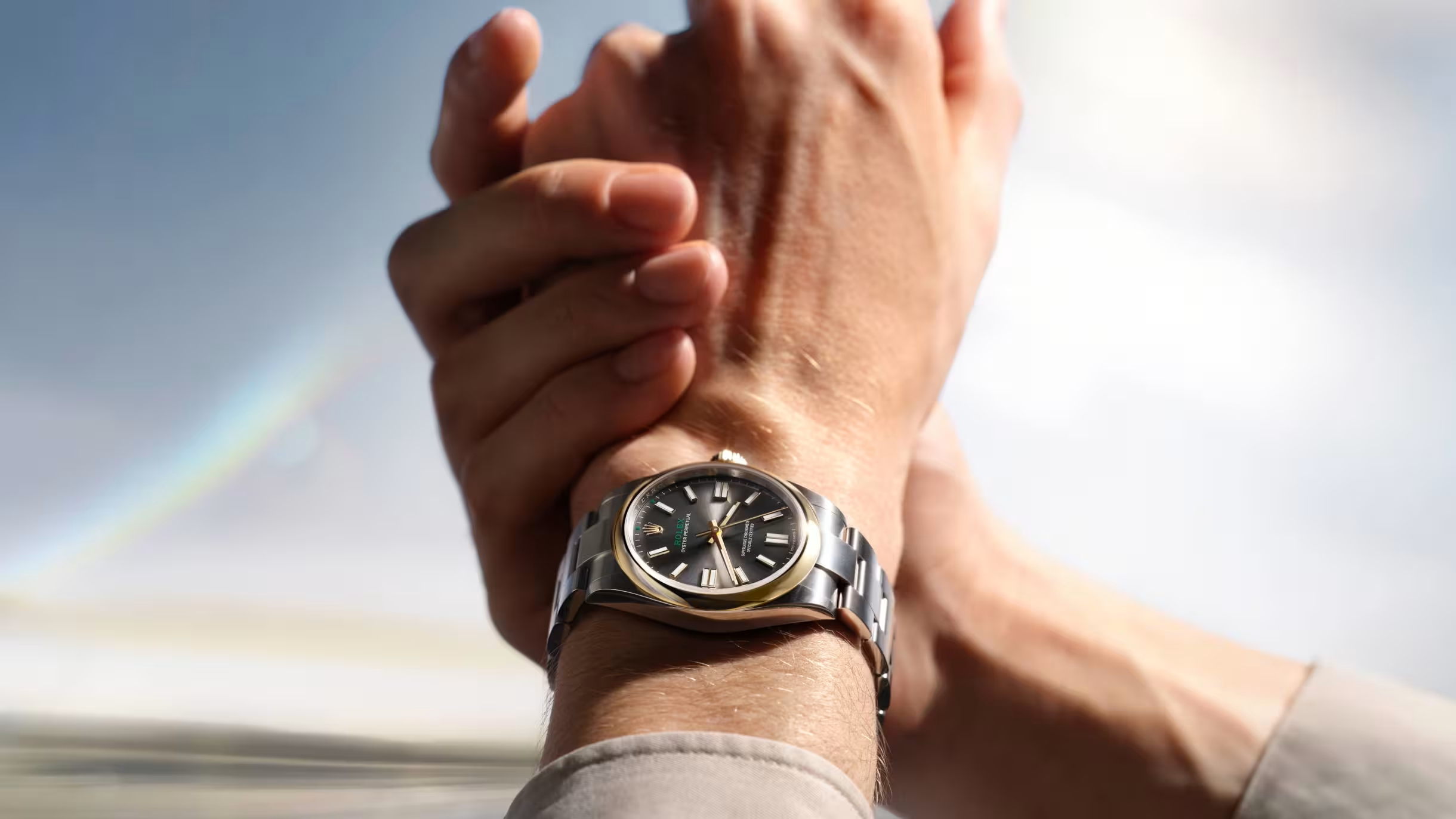
There’s a special Rolex Oyster Perpetual 41 (Ref. 134303), celebrating the 100 years of Oyster Perpetual. The watch is crafted in Oystersteel and yellow gold—the body comes in Oystersteel, while the bezel and ‘100’ stamped crown comes in yellow gold. The watch debuts in a slate dial, featuring the inscription ‘100 years’ at 6 o’clock on the flange.

The details on the dial include the presence of green square on the minute track in the intervals of five, pad printed ‘Rolex’ in the same green, and Chromalight coated hour markers and hands.
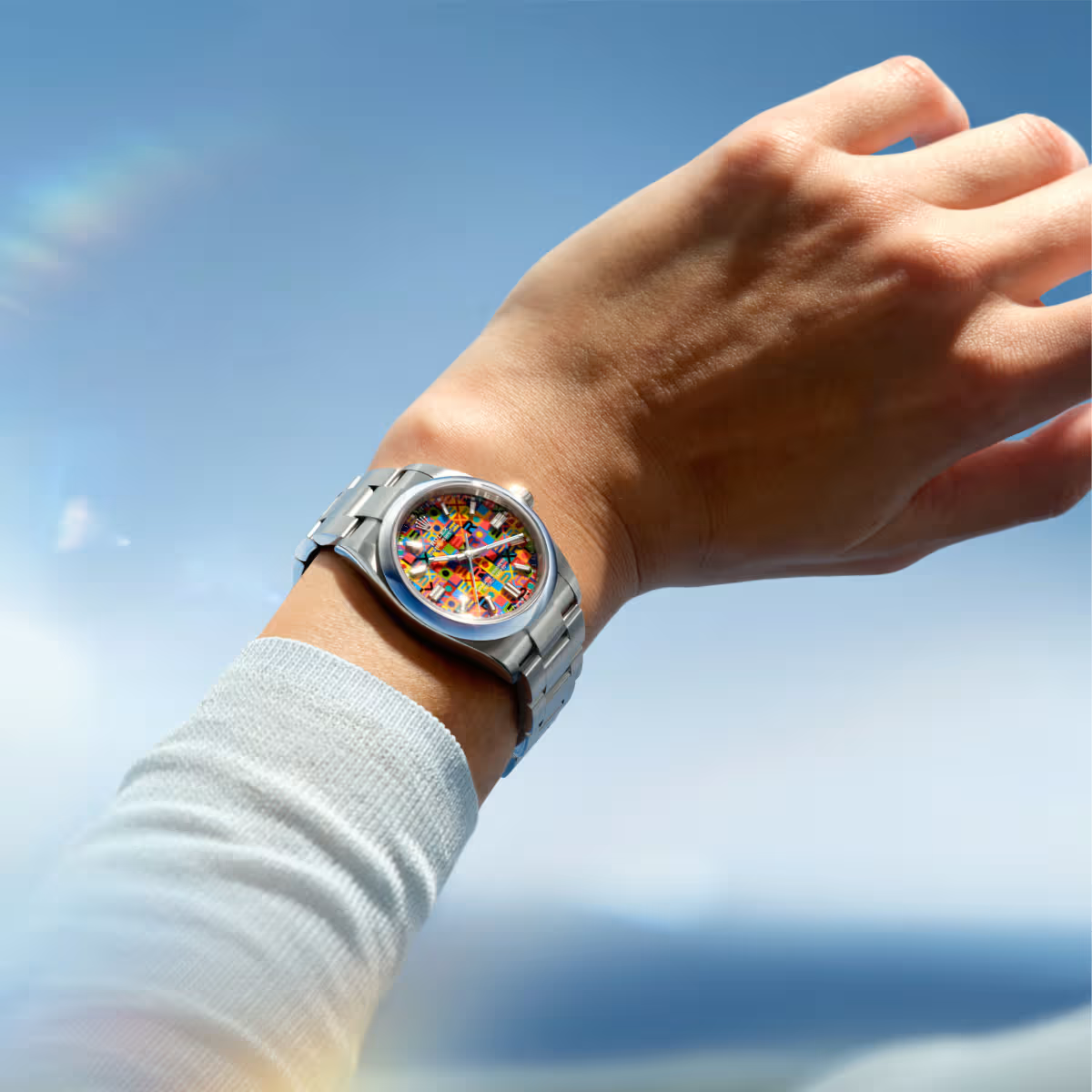
More Oyster Perpetual models include an Oyster Perpetual 36 (Ref. 126000), featuring a multi-colour lacquered dial. Looking closely, you will see a playful dial formed from the composition of ‘Rolex’ name. The Oystersteel watch measures 36 mm and is completed with a Oyster bracelet.
The new Rolex Oyster Perpetual 41 and 36, both are equipped with automatic movement Calibre 3230 with 70-hours of power reserve.
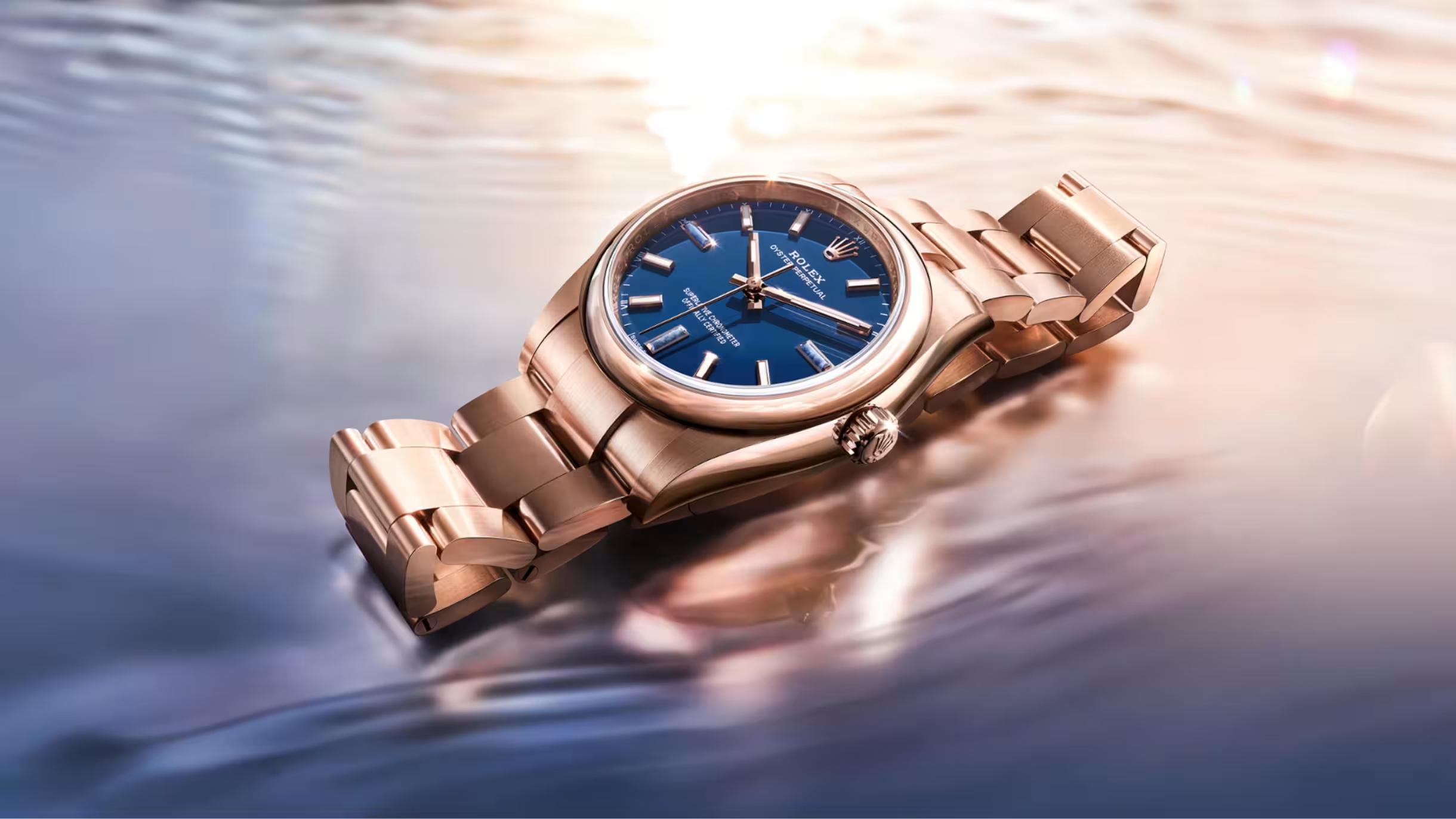
Then, there’s Oyster Perpetual 28 and 34, appealing in 18-karat yellow gold (Ref. 276208) and rose gold (Ref. 124205), respectively. The watches also feature green stone and blue stone dials, in the aforementioned order. Moreover, the dials are highlighted with the same colour stone hour markers at 3, 6 and 9 o’clock, and the brand’s logo at 12 o'clock.
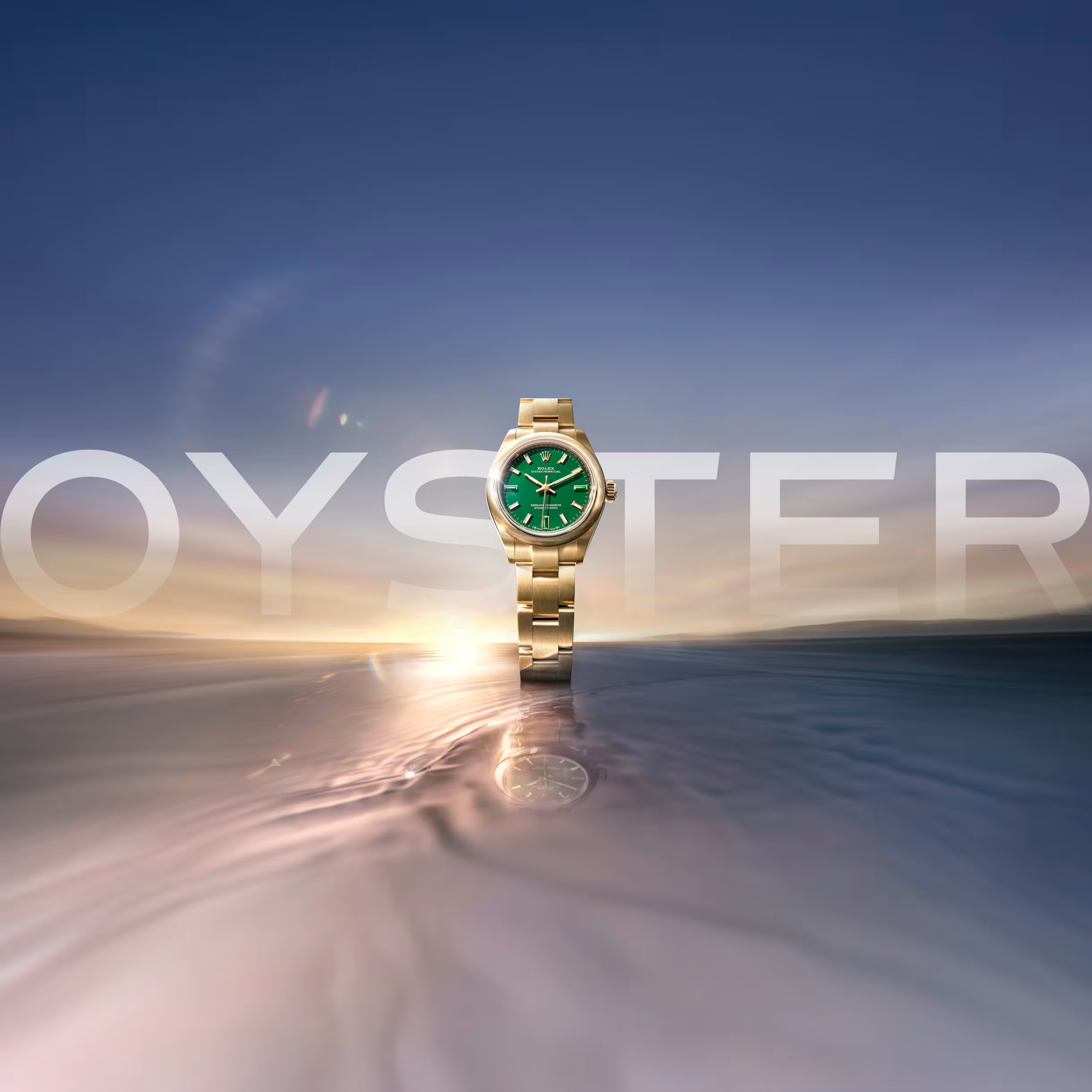
An automatic movement Calibre 2232 powers the watches and boasts a 55 hours power reserve.
Day-Date 40: Prestige in a new gold language

The new Oyster Perpetual Day-Date 40 is far more than just an additional precious metal variant. It marks the introduction of a new, entirely in-house developed 18-karat gold alloy called Jubilee Gold. Rolex describes this material as a shimmering hue somewhere between delicate yellow, warm gray, and soft pink. It's a color that defies easy categorization into a classic gold category, deliberately playing with intermediate shades. And therein lies its appeal: Jubilee Gold appears neither as cool as white gold, nor as saturated as yellow gold, nor as distinctly reddish as Everose. Instead, it creates a subtle precious metal character that lends the model a new, refined presence. This new alloy is paired with a light green aventurine dial crafted from natural stone .
Aventurine belongs to the quartz family and possesses a vibrant, sparkling depth thanks to its inclusions. Rolex combines this natural stone with ten baguette-cut diamond hour markers, set in Jubilee gold chatons. The fluted bezel and the President bracelet with concealed clasp complete the look and firmly establish the watch within the classic Day-Date design language. It is precisely this interplay between tradition and material innovation that makes the new Day-Date 40 so compelling. Since its introduction in 1956, the Day-Date has been one of Rolex's most iconic models. It was the first wristwatch to display not only the date but also the full day of the week in a semicircular window at 12 o'clock. To this day, it is available exclusively in precious metals and is considered Rolex's most prestigious collection.
Classical architecture, modern manufacturing techniques

Technically, Rolex remains true to its proven design principles with the Day-Date 40, albeit at a very high level. The 40-millimeter Oyster case is water-resistant to 100 meters and follows the familiar construction with a monobloc middle case, screw-down case back, and screw-down Twinlock crown with a double sealing system. The anti-reflective sapphire crystal features Rolex's signature Cyclops lens over the date window, further enhancing the everyday usability of the calendar display. Inside beats the Calibre 3255, an automatic in-house movement with day and date display, which has been among Rolex's most powerful calibers for years.
It utilizes the patented Chronergy escapement, a paramagnetic blue Parachrom hairspring, the Paraflex shock-absorbing system, and offers a power reserve of approximately 70 hours. Rolex emphasizes not only precision but, above all, the totality of its everyday usability: resistance to magnetic fields, reliability, ease of use, and long-term stability. This holistic approach is precisely what underlies the in-house "Superlative Chronometer" certification, which was further tightened in 2026 and now explicitly includes insensitivity to magnetic fields, reliability, and durability. The required accuracy after casing the movement is -2/+2 seconds per day.
Cosmograph Daytona: High-tech, enamel and platinum

While the Day-Date 40 focuses on refined material nuances, Rolex takes a significantly more experimental approach with the Cosmograph Daytona . The new version appears in Rolesium, a combination of Oystersteel and platinum, a material never before seen on this reference. Even more remarkable, however, is the way Rolex combines several design and technical innovations: a white enamel dial, an anthracite Cerachrom bezel made of a new ceramic enriched with tungsten carbide, and a case with a transparent case back that reveals the movement. The bezel plays a key role here. Rolex has developed a novel ceramic based on zirconium oxide, enriched with tungsten carbide, which gives the surface a pronounced metallic luster.
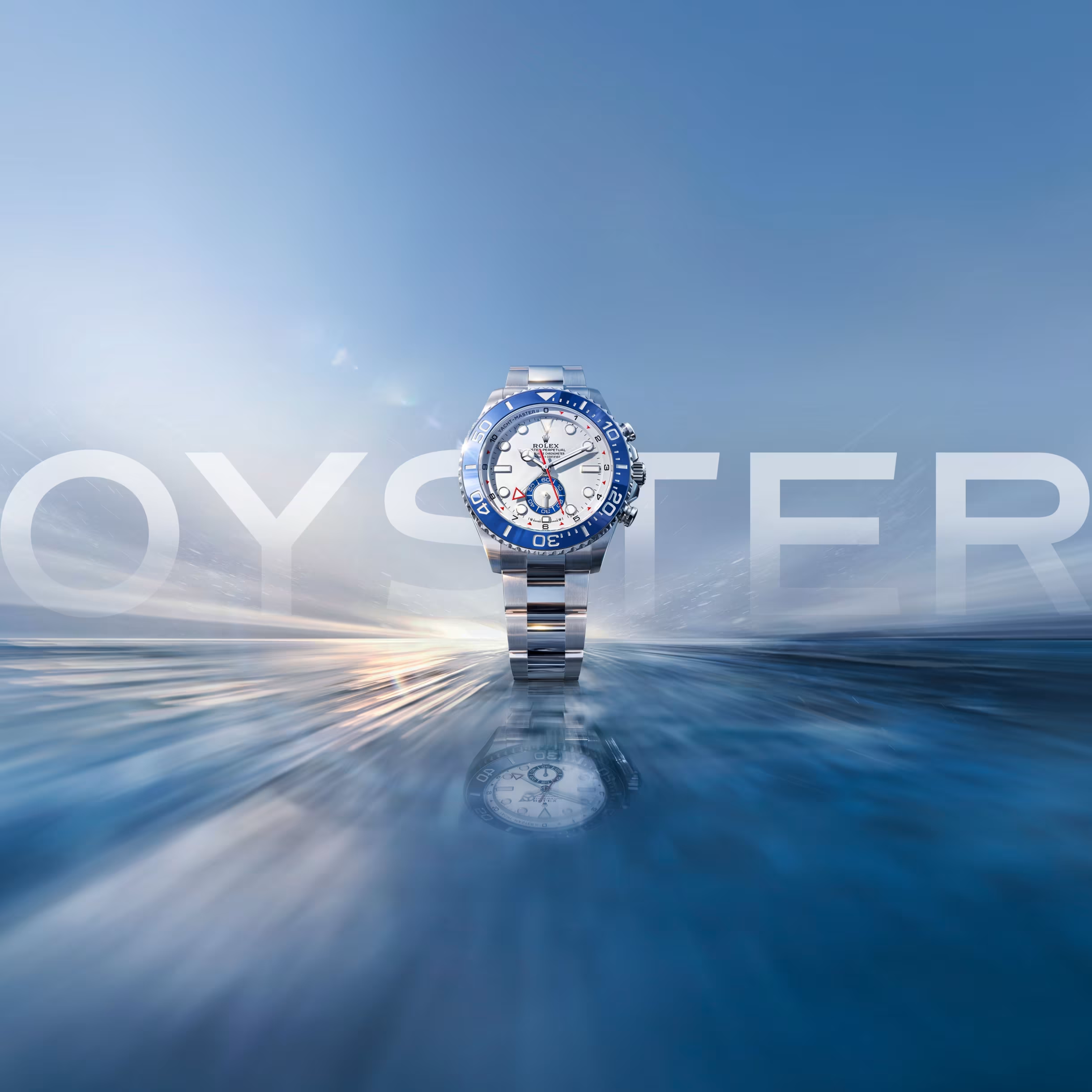
This anthracite tone has a distinctly more technical look than the previously used black Cerachrom bezels and stands in striking contrast to the light dial. A redesigned tachymeter scale further enhances the effect: the numerals are now horizontally oriented, appear to float, and feature a more modern typography. The dial itself is a small masterpiece. Rolex uses Grand Feu enamel here, applying the enamel not directly to a traditional metal disc, but to ceramic plates, which are then mounted onto a brass base. According to Rolex, this unusual construction required the development of a special process. The result is a deep, exceptionally pure white with high durability and a characteristic luster that only genuine enamel can produce. Especially when combined with the cool Rolesium case and the dark bezel, the overall effect is remarkably clean and crisp.
Daytona remains a motorsport – but with new sophistication.

Despite all the material innovations, the watch remains clearly recognizable as a Daytona. The basic architecture, with its 40-millimeter diameter, screw-down Triplock crown, screw-down pushers, and Oyster bracelet, remains unchanged. Its function as a high-performance sports chronograph is also fully retained. The tachymeter scale on the bezel continues to be used for calculating average speeds, thus keeping the model directly linked to its original purpose in motorsport. Since its introduction in 1963, the Daytona has been one of the most influential chronographs in watchmaking history.
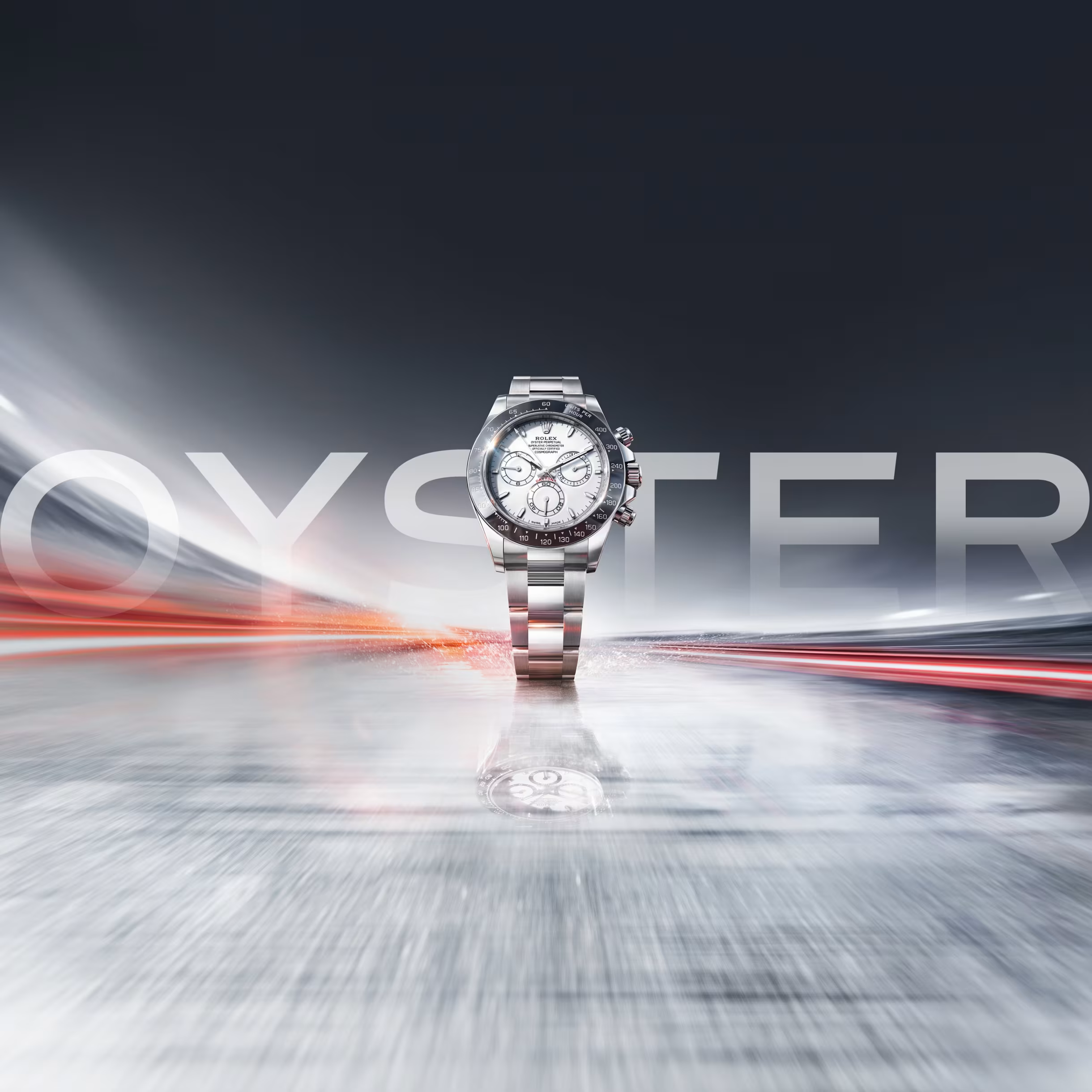
The Oyster case is water-resistant to 100 meters, its Oystersteel middle section crafted from a single block, while the case back and bezel are made of platinum. The transparent sapphire crystal case back offers a view of the Calibre 4131, a column-wheel, vertical-clutch automatic chronograph movement that Rolex has used since the latest Daytona generation. Decorated with Côtes de Genève, this version features an openworked yellow gold rotor, creating a striking color contrast to the watch's overall cool aesthetic. Technically, the Calibre 4131 remains focused on robustness and precision. It incorporates the Chronergy escapement, a blue Parachrom hairspring, Paraflex shock protection, and boasts a power reserve of approximately 72 hours. The chronograph function with central seconds hand, 30-minute counter at three o'clock and twelve-hour counter at nine o'clock is controlled with particular precision and reliability by means of a vertical clutch and column wheel.
Two new products, two strategies
What's particularly interesting is how differently Rolex has developed two classic pillars of its portfolio. The Day-Date 40 defines prestige through nuance: a new precious metal, a mineral dial, and stylish refinement. The Cosmograph Daytona, on the other hand, demonstrates progress through contrast: technical ceramic, handcrafted enamel, Rolesium, a sapphire crystal case back, and a modernized scale architecture. Both models show that Rolex is less interested in a radical reinvention of its icons than in ever more precisely refining their respective character. The Day-Date becomes even more sophisticated, the Daytona even more technical and, at the same time, more refined. This is precisely where the real strength of these new releases lies. The two models appear as highly controlled, long-term developments of two timepieces that have long been firmly established in the canon of modern watchmaking.
This article also features information from the article published on WatchTime.net
Images: Courtesy brand
Also Read :
Watches and Wonders 2026: A. Lange & Söhne introduces Lange 1 Tourbillon Perpetual Calendar ‘Lumen’
|
Watches and Wonders 2026 Preview: Nomos Glashütte brings its Club Campus in two new colours
|
Geneva Watch Week 2026: Jacob & Co.’s two new Bugatti Tourbillon Sapphire Crystal
|
Geneva Watch Week 2026 Preview: MB&F’s M.A.D.Editions introduces two new MAD2 variants in red and black
More In news



Sign up for our newsletters to have the latest stories delivered to your inbox