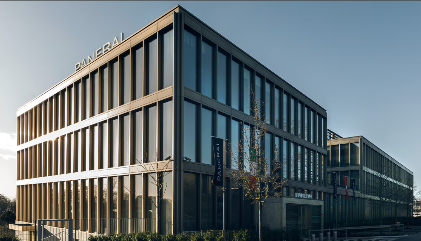
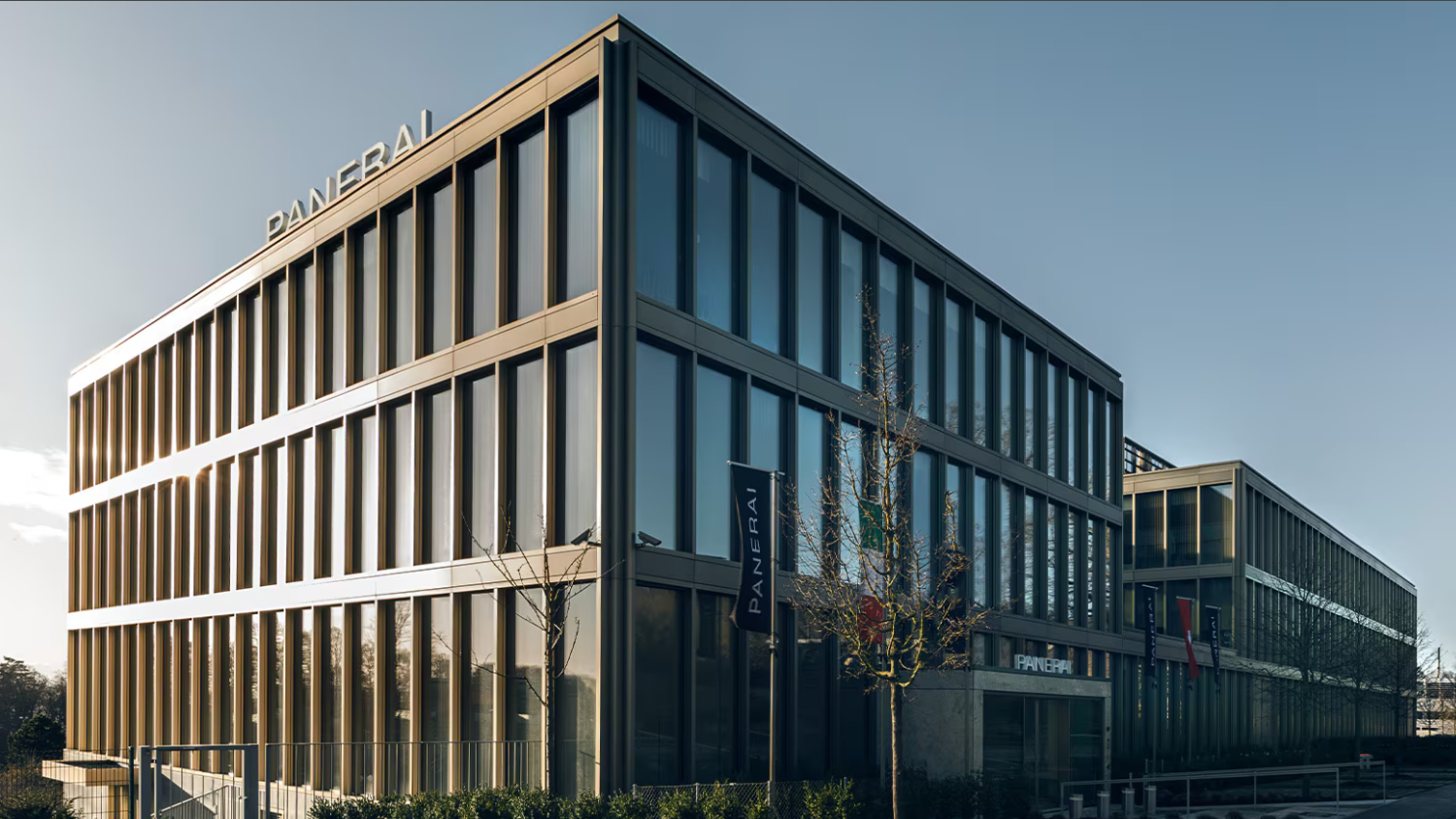
It’s a cool and breezy day in the quiet town of Neuchâtel, Switzerland, home to several watch manufactures, including that of Officine Panerai. It is the biggest manufacture in the area, spanning more than 10,000 square metres, but another aspect that sets Panerai apart is that though the brand creates Swiss watches, its Italian soul is unmistakable. This is evident the moment I cross the threshold of its glass facade to step into its manufacture’s reception area—a sleek, modernist space with a strong emphasis on proportions and lines, and wooden flooring that is set against black and white undulating walls.

The brand’s heritage is equally reflected in the large Panerai wall clock that greets you as soon as you enter, reflecting the signature Luminor aesthetic with Arabic numbers, bar markers, and small seconds, coated with green glowing Super-LumiNova. Harmonising with that, a supersized number ‘3-’ and a ‘6’-shaped seating in light green echo the typography of Panerai’s dials and its legacy in luminosity. After all, luminescence is a brand cornerstone, dating back to 1916 when Panerai developed Radiomir, a radium-based luminous material used for military dive instruments, and in 1949, further innovated with Luminor, a safer, tritium-based compound that shaped the identity of its now-iconic Luminor collection. The displays in the common area further emphasise this. The six types of luminous materials the brand has used (Radiomir, Luminor, Super-LumiNova, Vintage-Style Super-LumiNova, X1 Super-LumiNova, and Lume-Integrated Components) are showcased, along with elements that are typical of Panerai: its sandwich dial, in-house movements, light titanium and carbon cases, and crown-protecting devices.
My group of media guests is soon joined by Jerome Cavadini, chief operating officer, Officine Panerai. Decked in lab coats woven with Kevlar (that help capture dust and hair before one enters the floor), we are led by Cavadini to a conference room, where he takes us through the brand’s popular collections: Luminor, the iconic line known for its patented crown-protecting devices; Radiomir, vintage and classic, named after the brand’s patented luminescent material; Submersible’s robust, professional diving watches crafted with high-tech materials; and the elegant and versatile Luminor Due. After all, it is this Officine Panerai manufacture where all these watches are designed, assembled, tested, prototyped, and often serviced, including the Submersible Elux LAB-ID, the brand’s technically advanced highlight watch released last year.
Opened in 2014, the manufacture is also capable of producing and assembling 12 different calibres, of which eight are built in-house—the list includes both manual winding movements like P20.02/E, P.2015/T, P.2005/T, P.2005/GLS, and P.5000, and automatic movements like P.9010/AC, P.4001/S, and P.4100. The high-tech manufacture also boasts 40 specialised machines and 250 employees, who work on every aspect of watch creation, including a whopping 1,50,000 quality tests in a year (while Neuchatel is the brand’s watchmaking hub, it is the Milan headquarter that serves as the centre for its CEO, finance, marketing, HR, and other strategic departments). This expertise includes material innovation. Panerai has five patented materials: BMG-tech™ (Bulk Metallic Glass), made from a special glass-like alloy; Carbotech™; Ceramica, a synthetic ceramic based on zirconium oxide powder; Platinumtech™, the brand’s proprietary platinum alloy; Goldtech™, a gold alloy containing 75 per cent gold, combined with platinum and copper; and Ti-Ceramitech™, made with titanium and ceramic.
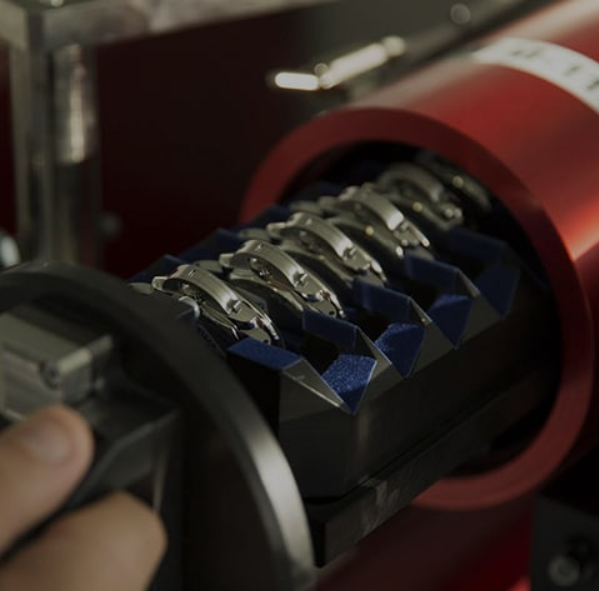
These materials were all first envisaged at Panerai’s Laboratorio Di Idee, the in‑house research & development department, which the brand takes great pride in. The department, also a part of the manufacture, boasts a team of 50 specialists assigned to develop advanced materials, movements, and technologies. It is where the brand’s concepts come to life. It is here that we began our technical journey by observing how Panerai is exceptionally specific and precise in the tests it performs, with the goal of wanting to know how the watches will perform real-time. With the help of high-tech machines, some of which were developed by Panerai itself, the brand even runs tests that tell you how the watch will perform in the next 10 years. “So, when it comes to wheels turning, we have them turning faster than usual to simulate what could be an output after X years. Of course, no client will do 5,000 times start, stop, and reset on a chrono, but this is the only way we find out how the watch will function after X years,” says Cavadini. The brand provides two plus six years of warranty, the latter after registering with the Pam.Guard programme, valid only on watches purchased in the past two years.
All watches follow a complete path of testing to ensure reliability and durability. The crown, date discs, wheels, and oscillating weight are all tested in the latest generation machines, which are capable of working days, nights, and weekends to check functioning in an enhanced state. This is the first step where the watches are approved and homologated by the employees managing the department.
Next, we stepped inside another room to witness on the simulation system a rather ominous sounding test, called the crash test. It involves dropping the watch from a height of one metre with a force of 5,000G, on a wooden piece to check the shock protection, reliability, and durability. The test can be run in any position, and we were able to witness it being executed on the brand’s in-house hand-wound Calibre P.5000, which as expected, came out the other side working just fine. “Of course, you have to go to service your watch, but the good point is that after a shock like this, you still won’t miss your flight, rendezvous, or train. I do not guarantee a perfect tick-tock, but it still works, and that’s the key message,” Cavadini says proudly.
Testing is one of the things that the manufacture focuses on heavily, as evidenced in the chamber where the watches are tested for waterproofness. Panerai tests water resistance 25 per cent more than the declared limit to ensure reliability under extreme conditions. The brand’s water testing standards also include a “water drop” test, a simple method where the heated case is touched with a drop of cold water on the crystal to detect any kind of moisture and flaws.
Panerai is very specific when it comes to testing watches. The brand performs around over 60 tests including drop test, shock resistance, anti-magnetism, water resistance, fogging, accuracy, gas penetration, decompression, and accelerated ageing, to ensure that each timepiece meets the highest standards of durability, precision, and performance even in the most challenging conditions.
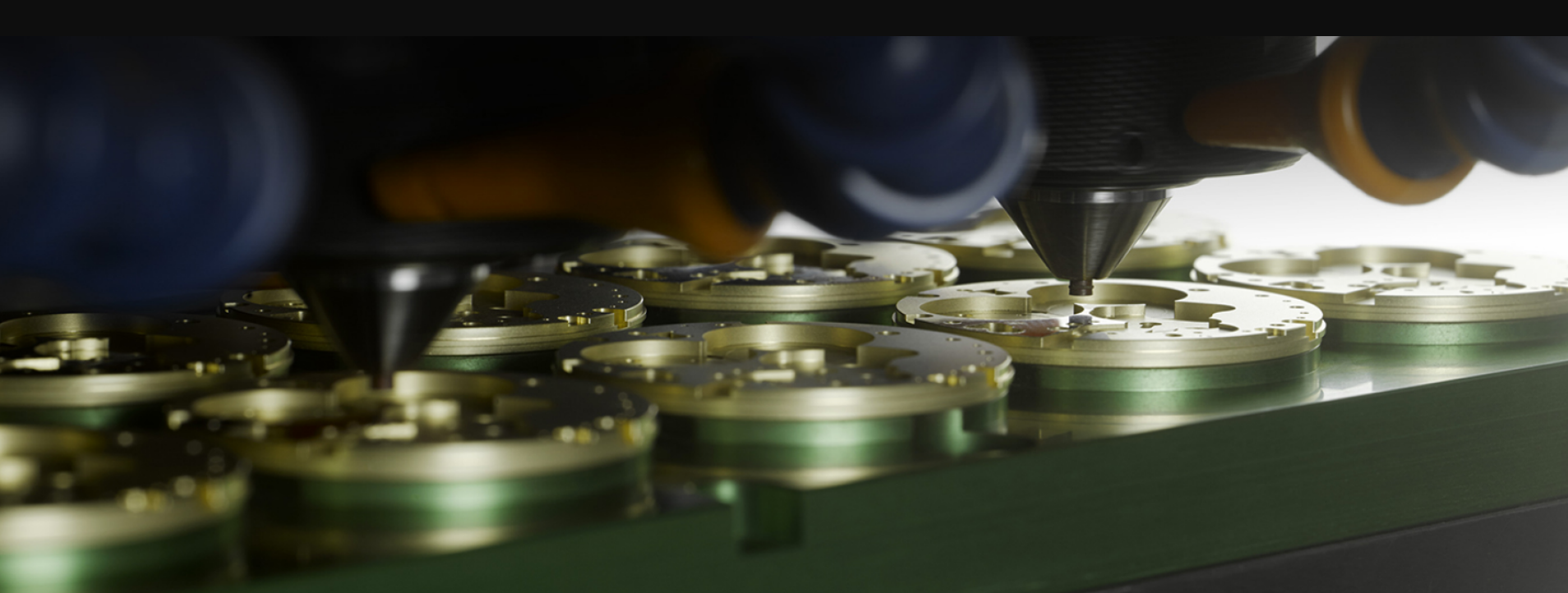
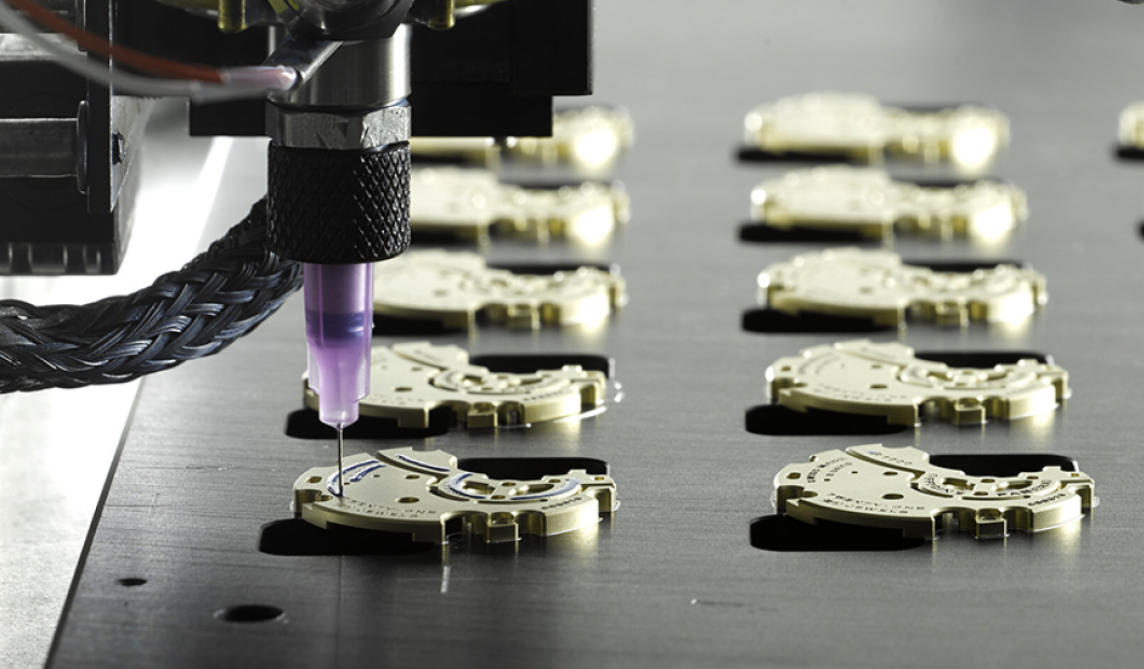
On the ground floor, an 800-square-metre area is dedicated to the latest generation machines where the brand’s technicians transform raw materials into bridges, plates, and other key components. While most components for its watches are made by Panerai at the manufacture, including the baseplate—Cavadini showed and explained to us how 10 people set 25 machines to do the work with accuracy and precision—components such as barrels and wheels are not made in-house. “For Panerai, it is not the purpose to integrate everything,” says Cavadini. “We have to do what we are good at.” At the movement and watch assembly area, trained watchmakers meticulously arrange and adjust all components. Once the cases are correctly assembled, straps are attached, which are also rigorously tested for durability and ergonomics. The watches are now ready to be packed and shipped.
Apart from being a state-of-the-art facility, the manufacture is also environment friendly, with its carbon dioxide emissions at nearly zero. Keeping in mind sustainability, the factory also produces minimum waste, as well as uses 1.8 GWH of electric energy per year generated by green hydroelectric power. Perfectly on point for a brand that prides itself on its tenets of excellence.
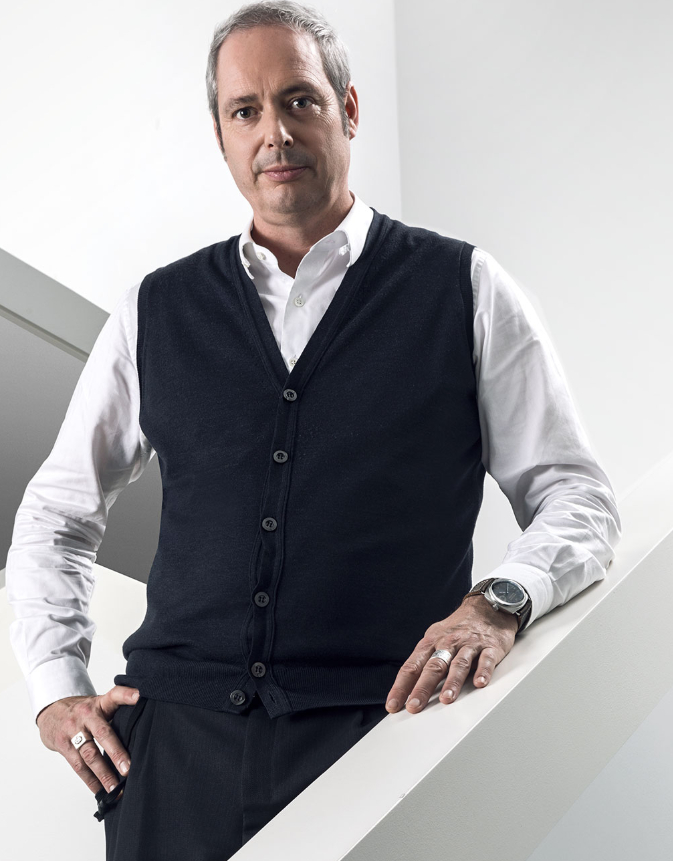
Last year (2025) at Watches and Wonders, the brand highlighted its most celebrated Luminor Marina collection with new materials and innovation. The highlight was the Ref. PAM03312, which you can read more about in our Watches and Wonders 2025 feature on page X. We spoke with Jerome Cavadini about the brand’s priorities, the latest launches, and what more to expect from Panerai this year…
WatchTime India: At Watches and Wonders 2025, Panerai focused heavily on its Luminor collection. What drove this renewed focus?
Jerome Cavadni: Our purpose was to enhance the existing product, keeping the strong design that we have from the 1960s. You saw the eight new Luminor models on display. So, we were working on an icon, and that’s a very sensitive topic because the three watches—they are bestsellers, especially the black, white, and blue dial versions.
The idea was to bring more value and content to the customer, for the same price. It was also about introducing the new movement with the cross-balance bridge, which is more resistant to shocks. It makes the watch more of a true tool for the customers. We added a bevelled window on the dial for better date visibility and a quick-release strap system as well. In short, it was all about improving quality and functionality and adding value at the same price.
WTI: Blending innovation and heritage—how does Panerai strike that balance?
JC: Innovation and tradition are key points for our engineers and R&D team. We respect our past while tracing the future. The luminosity, waterproofness, and crown-protecting device are given—we have got it from our predecessors. But we can go further. So, when it comes to new movements and functionalities, of course, we cannot come up with a spectacular E-Lux every year. But we will continue to push the boundaries. We have a five-year map for the new materials to come, with more than 10-15 different ways to create them, of which around 70 per cent will be abandoned because it’s innovation—you try and test it. So, for us, the part (past?) is a source of inspiration but is limited to these key codes like crown protecting device, waterproofness, reliability, and luminosity. If we respect these four pillars, then we can go ahead.
WTI: Panerai entered the Indian market 14 years ago. How has the brand’s trajectory in the country been?
JC: We are convinced that we have good products for Indian customers. India is vast and our communication has to be very focused so that everyone knows our history and that our products are super reliable. It’s a long journey, but we’re patient. We're not looking at short-term gains. We’ll still be here in 50 years. We're starting in the big cities, and we’ll grow organically from there. For India, it’s the quality, fair price, and iconic design that make sense as well. And we have a nice legacy and I hope that will please Indian clients.
WTI: You have been with Panerai for more than 15 years now. As COO, what are your key priorities in driving Panerai’s operational excellence?
JC: By far, the first is quality. And I hope that your visit convinced you about that. We wake up thinking about the quality, and we think about it all day long. The second is something that can be boring for the client but is very important to us—the delivery rate. So being good at forecasting and having good needs in execution means having the right products at the right place. With a global presence and multiple subsidiaries, this is a major focus for us.
WTI: The most fascinating or lesser-known aspects of Panerai’s watchmaking process?
JC: I have been at this company for so many years that it is not just a brand for me but a part of my life. I would say that something that I did not see anywhere is the kind of spirit with the size of this brand—it is super cool. We are 250 here and 750 globally, but we know each other, almost all. And people stay in the company for long. If people join Panerai, they stay for a good five to ten years. In Panerai, there is the energy to go all together.
WTI: What should we expect from the brand in the next few years?
JC: There will be new functionalities, new movements, and of course, new materials. About waterproofness, it is not the watches that have come, we will continue to push and increase it. Because it is in our DNA. The message is that you can trust our product. If we provide 500m of waterproofness, it means that we have tested it in 625m and more.
WTI: Describe Panerai in just three words.
Images: Courtesy Brand
This story first appeared in WatchTime India's July-September 2025 issue.
Also Read :
Watches and Wonders 2026: Panerai reaches 31 days of power reserve and uses forged titanium for the first time
|
Panerai announces cricketer Shreyas Iyer as Friend of the Brand at Ethos City of Time, Gurugram
|
Watches and Wonders 2025: Panerai Unveils New Luminor Marina Collection and Perpetual Calendar GMT
|
Renowned Panerai expert Francesco Ferretti's watch collection
More In features

Sign up for our newsletters to have the latest stories delivered to your inbox