Straw marquetry: Making straw fit for a king
Straw marquetry is an unusual and ancient craft. It takes something rather common, rye straw, and turns it into something noble. It was practiced by the Sumerians from southern Mesopotamia, which flourished between 4500 and 1800 BC, and was also among the goods Marco Polo brought home from China. As it takes a lot of time, patience, and effort to master, it is not a surprise that straw marquetry in the Western world was first practiced in monasteries. The beauty of Bibles with straw marquetry decorating the cover soon captured the hearts of the nobility, turning it into a true artistic decoration technique, or as it is called in French, ‘métiers d’arts’.
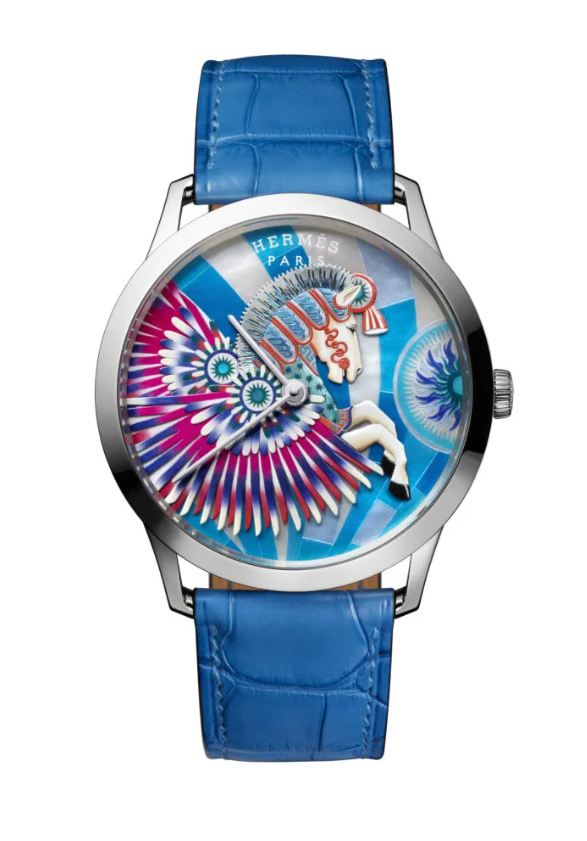
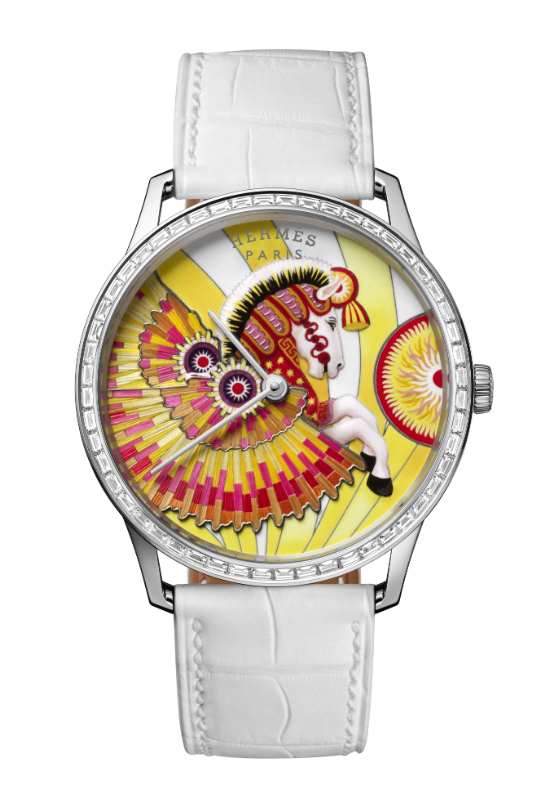
Both versions of the Slim d’Hermès La Source de Pégase utilise straw marquetry to bringthe delicate nature of the wings to life
The nobility not only liked their Bibles decorated with straw marquetry but often utilised it as well in their home décor. That is how it is used today, if you can find a craftsperson who still masters this art. It is increasingly difficult to find, mostly because it takes a lot of time and dedication to get the technique right. Even then, decorating an object with straw marquetry remains a tedious task that cannot be hurried. The reward is twofold: for the artisan to have completed yet another masterpiece and for the (future) owner to enjoy an ancient and nowadays rare craft.
The only type of straw used for straw marquetry is rye. It has a unique combination of flexibility and strength that makes it perfect to apply on a wide variety of objects, including watch dials. Rye straw also has natural varnish that gives it a unique shine, which elevates the experience of the straw marquetry to another level. The straw comes from a supplier named Jean-Luc Rodot from Burgundy, France, one of the last of its kind, if not the only one. He mastered not only selecting the right quality of straw but also developed the pigments and procedures to dye the rye in a wide variety of colours. It might be hard to fathom in today’s world of standardisation, but even with all his expertise and experience, colours can often not be exactly replicated, as the straw itself is a natural product. For the artisans, this means that they need to order all the straw required for a project at once so that no colour differences occur.
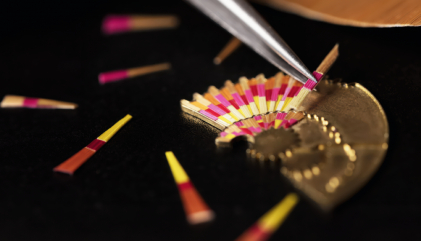
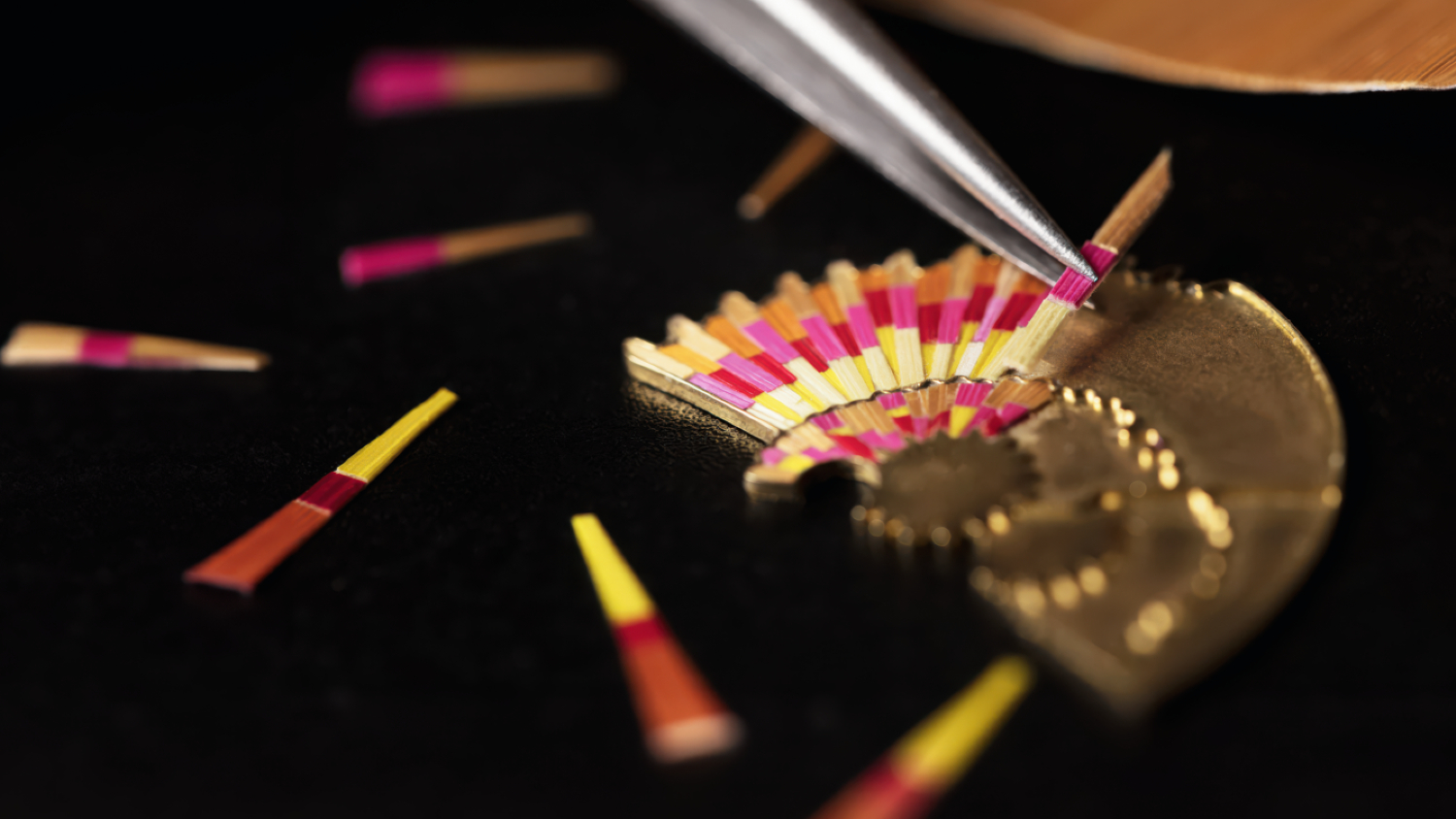
Of course, with something as small as a dial, this is less of a problem. Here, the challenge is more about working on a very small surface, where the designs are intricate and miniature yet also have to be expressive. First, the straws are cut open and flattened, after which the artisan glues them onto a paper base. From this, the designs can be created, and for watches, they are often so miniature that a microscope is a necessity. The straws are recut on their paper base and put together into the order that will make up the final design. They have to be placed perfectly right away.
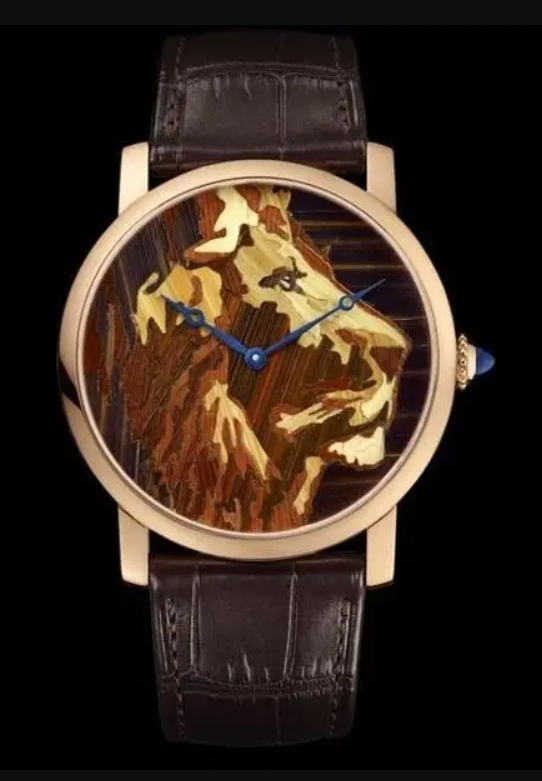
This Cartier Rotonde de Cartier shows like no other how playing with shades can create a sense of depth in the straw marquetry dial
Straw marquetry, therefore, requires a steady hand, concentration, and a lot of patience. The straws should be placed tightly together so that none of the material underneath is visible, but also not too tight so that you run the risk that they push too hard against each other and might fall off over time.
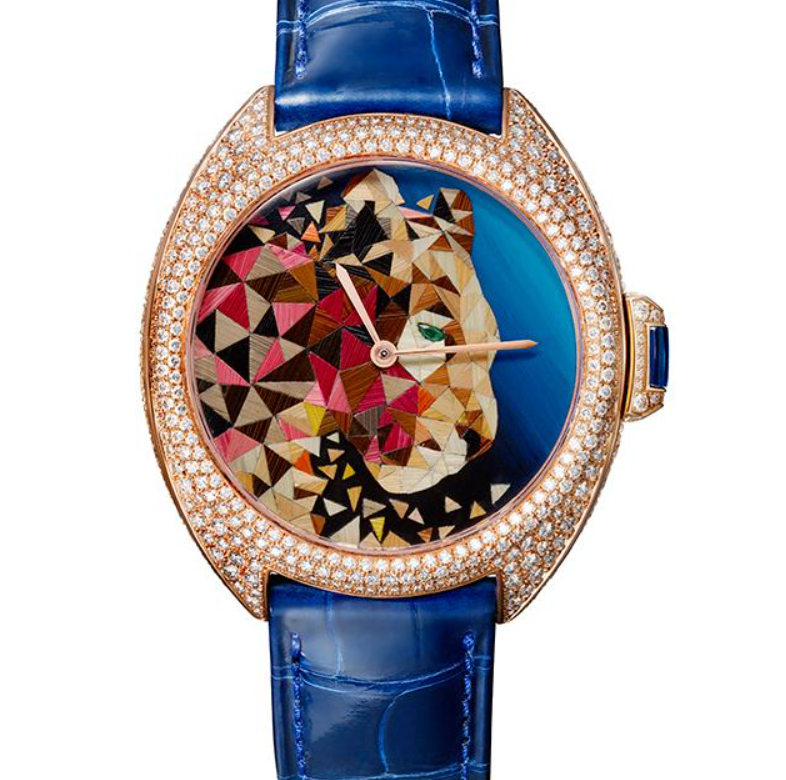
Straw marquetry may be a centuries-old craft, but it is often utilised in a modern way as this Cartier Clé de Cartier with panther motif in straw marquetry shows
The craft’s rarity means that even in high-end watchmaking, where métiers d’arts are celebrated and embraced, straw marquetry is hard to find. Today, most straw marquetry designs used for watches are surprisingly modern. A good example of this is a unique edition of the Clé de Cartier, where the dial is decorated with an artistic impression of the brand’s hallmark panther. Put together as a mosaic, the artisan’s capabilities are tested to the max, as this means that there are numerous edges that need to fit just perfectly. At the same time, this design works to showcase the unique texture of the rye straws. The same can be said of the limited edition of the Rotonde de Cartier, where we see an “en profile” image of a lion. Here the straws are coloured in a more natural way, with their texture enhancing the impression of shadows.
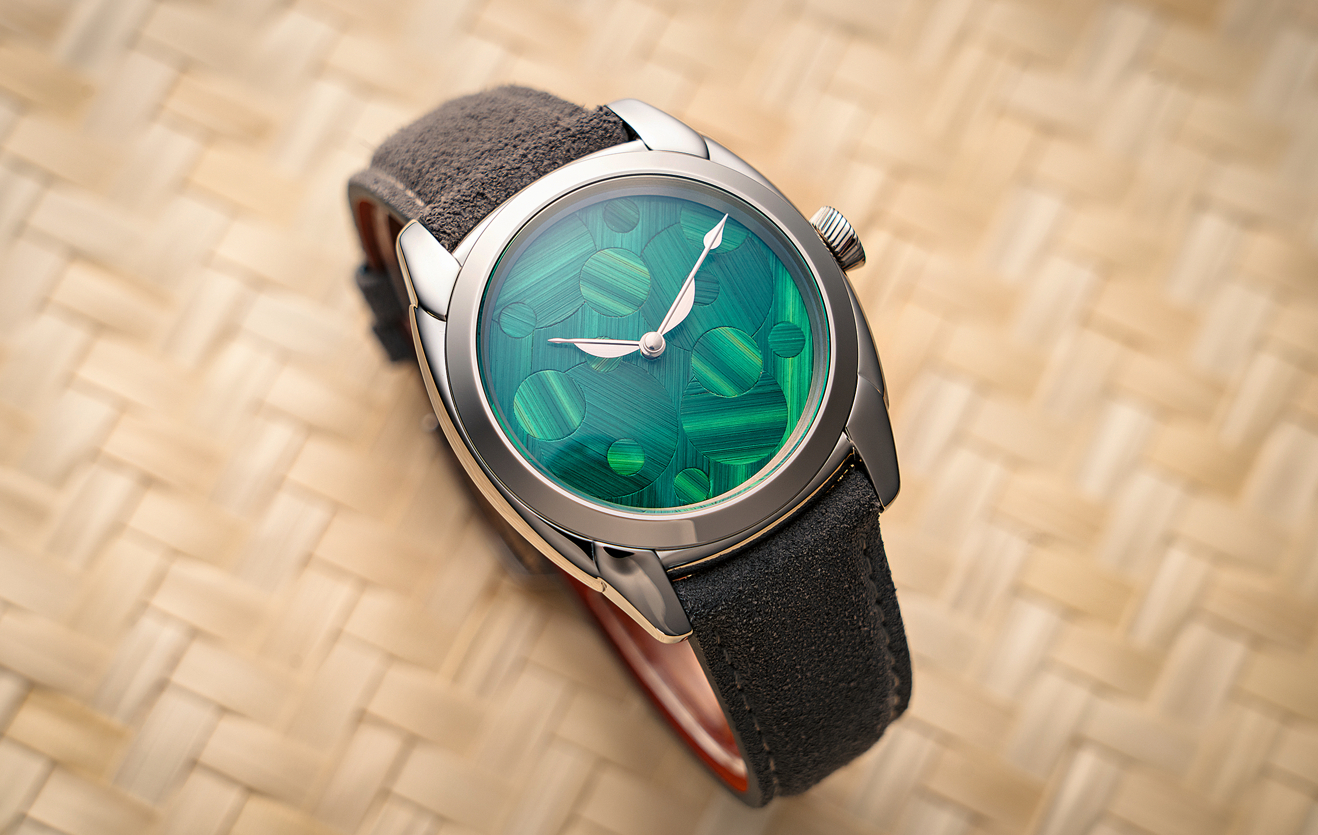
The Isotope Mercury M.
Hermès is also a brand that has utilised straw marquetry in its watch collections. In 2010, Hermès recreated furniture by the famous French interior designer Jean-Michel Frank in straw marquetry. Two different designs were available in the Arceau case originally created by Henri d’Origny in 1978. Both are a combination of pale blue and black straws, yet one has a chevron motif, while the other is decorated with small squares placed in opposite directions next to each other.
The theme for the Slim d’Hermès La Source de Pégase from 2015 is a winged horse in brilliant colours. Here Hermès utilised mixed crafts, combining engraving with miniature painting, and also a role for straw marquetry. Again, taking advantage of the unique texture of the rye straws, it was used to create the wings of the horse, giving them a featherlike look. The amount of detail is stunning, yet the individual parts of the wings are so small that they are a true testimony to the incredible skills of the artisan who contributed to these dials.
An unexpected entry in the world of straw marquetry is the British microbrand Isotope. The brand has already made quite a name for itself with its charismatic divers’ watches, but it recently launched the Mercury. This elegant and streamlined watch has a design inspired by the futuristic Mercury steam trains that travelled throughout the United States in the 1930s. Collaborating with Bernardo d’Orey, a straw marquetry artisan based in Paris, France, Isotope launched the Mercury M collection, with the ‘M’ standing for marquetry, priced at an unprecedented £4,800. D’Orey is a rising star in the world of straw marquetry, being initially taught by Lison de Caunes, one of the grand masters of straw marquetry today. Now, his mentor is Rose Saneuil, who is skilled in a wide variety of marquetry types, including straw, and who gets to count Louis Vuitton and Piaget among her clients.
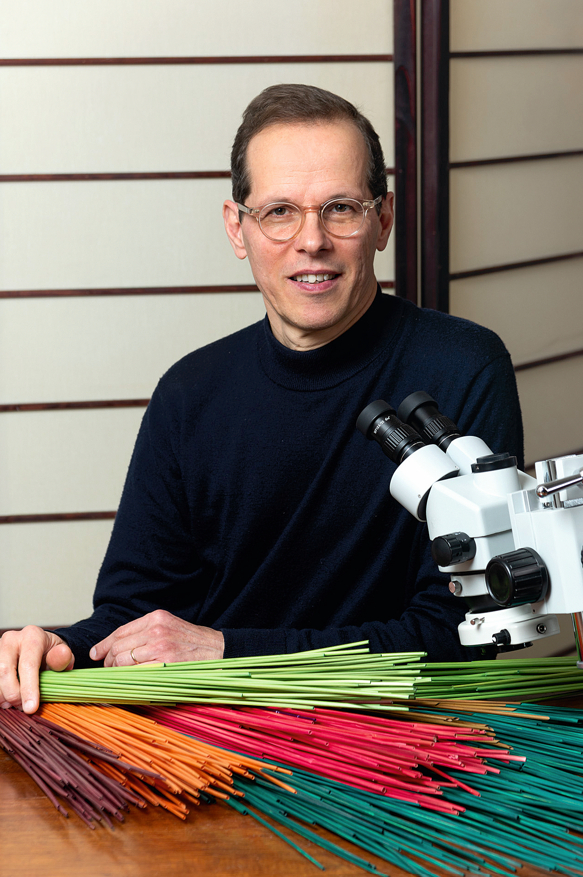
Bernardo d’Orey with different coloured rye straws and the microscope under which he makes his creations
The first two green dials that d’Orey made for Isotope also show the appeal of straw marquetry. The distinct bubble design gives the dial a dimensional twist, while the unique play of light of the rye straws is also perfectly visible. It is almost like it is a more vibrant version of malachite, although this design is entirely man-made. As the straws are a natural material, no two dials will be alike, even when they feature the same design. Simultaneously, the time-consuming nature of the craft, combined with the very limited number of artisans that master it, make it so that these dials will never be produced in bulk and remain a true treat for discerning watch collectors.
Engraving: Making metal come to life
Since the beginning of existence, humankind has made its mark on the world around it, sometimes, quite literally, by carving symbols, text, or designs into a variety of objects. Even quite a bit of our understanding of history comes from engraved objects. Engravings have always served multiple purposes. Think of the engraved seals on the rings of kings, which they could press in wax, authorising whatever was written on the paper it accompanied. In watchmaking, the use of engraving has always been less dramatic, focusing on the practical side, such as engraving serial numbers, but mainly used as a decorative art.
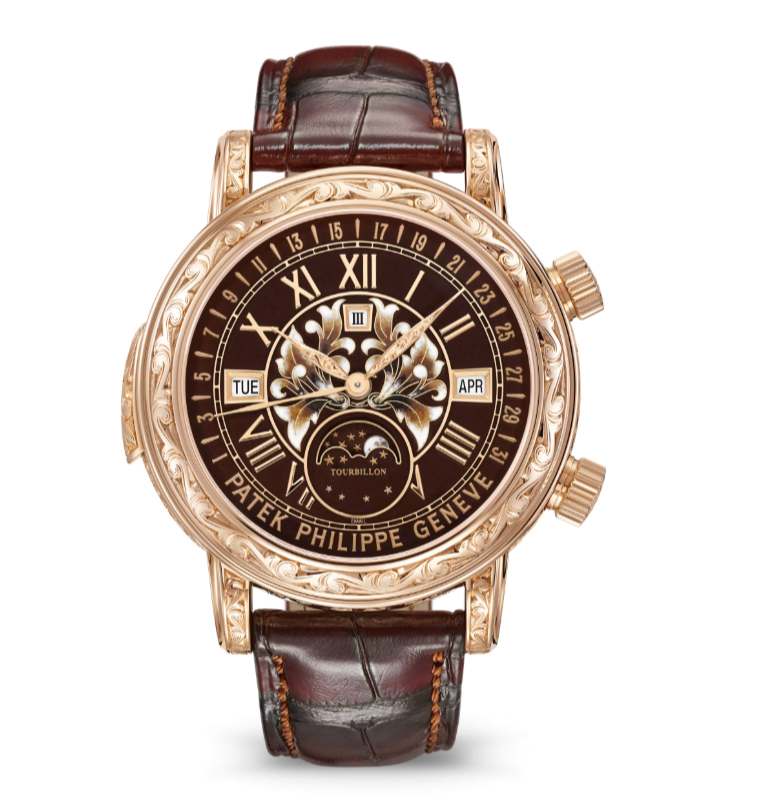
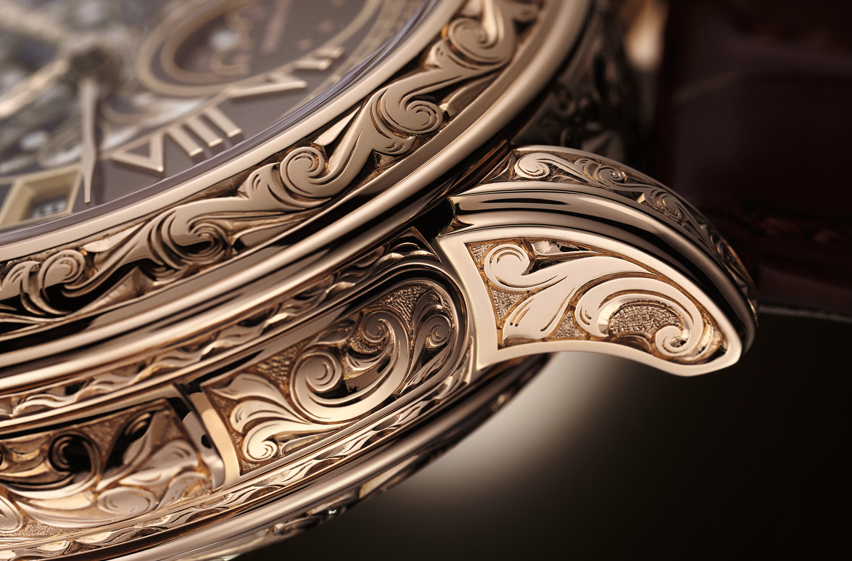
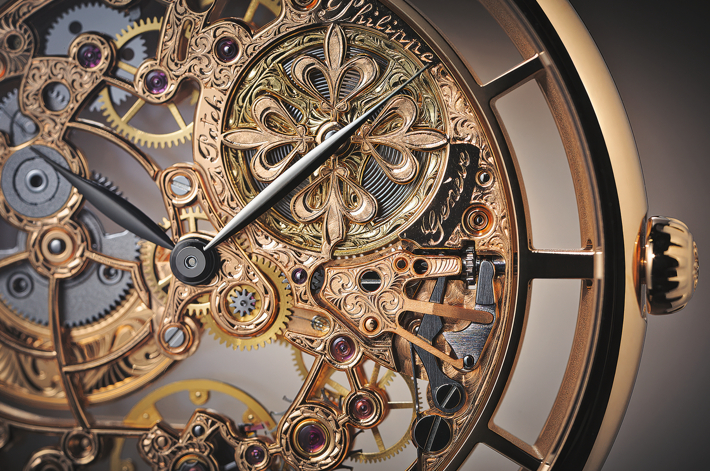
The stunning engravings underscore the precious nature of the Ref. 6002 Sky Moon Tourbillon by Patek Philippe even more
A distinction must be made between different engraving types, as laser and chemical engraving are also utilised in the world of watches. Here, the human hand is replaced by machines, computers, and chemicals, offering a crisp result at a fraction of the time and cost compared to hand engraving. While these technologies can serve as a gateway to engraving for more affordable watches, there is a reason that high-end brands all favour hand engraving. It is a far more individual expression that aligns with the values of high-end mechanical watchmaking. Compare it to having a high-quality print of a painting or the painting itself. A hand engraving is highly personal, regardless of how it looks, as engravers can even identify which fellow craftsperson made it. Just as we all have unique handwriting, so do the top hand engravers of the world.
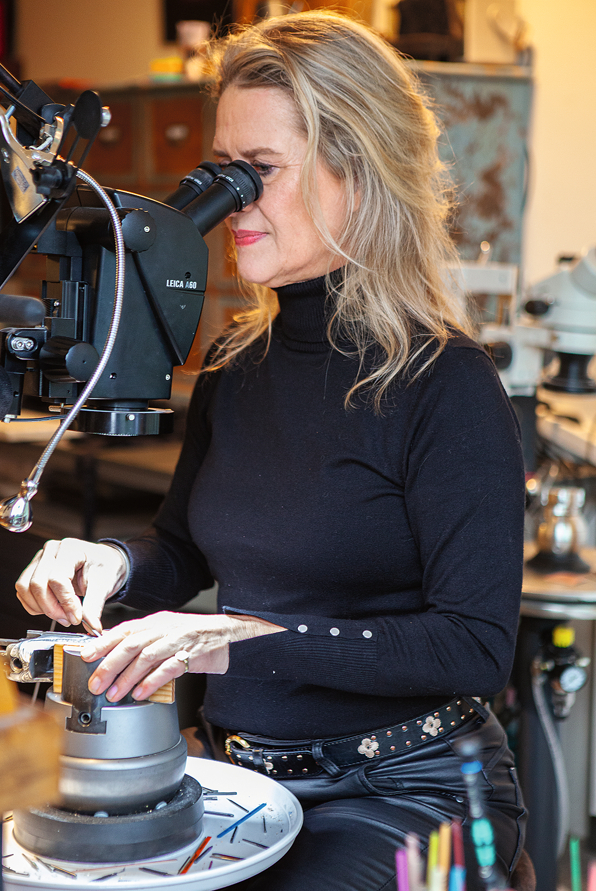
Dutch master engraver Cécile Oorthuis at work
Hand engraving is not for the faint of heart. It is often one of the last steps in the production chain, focusing on engraving cases, dials, or movement bridges. Even when it is so tiny, one mistake means that the part will be scrapped, and the whole process has to start all over again. Keeping cool is not the only challenge hand engravers have to deal with, as they are also in a constant battle with the material they are engraving. While they may look alike to us, a hand engraver can feel the difference between 316L and 904L stainless steel. All the different alloys, those of gold included, require their plan of attack, as each alloy has its unique characteristics. How to tackle these differences in resistance and toughness is not only in the wrist but also in how the gravers, the tools they use to carve into the metal, are prepared. This starts with the ‘face’, the shield at the front of the graver that does the actual cutting. When engraving in stainless steel, these are commonly sharpened at a 60-degree angle, while gold requires an angle of around 47 degrees. The shape of the ‘heel’, the underside of the graver, is also essential. The heel makes the graver go through the metal instead of just making a puncture, and playing with the angle enables the engraver to make the cut deeper or shallower.
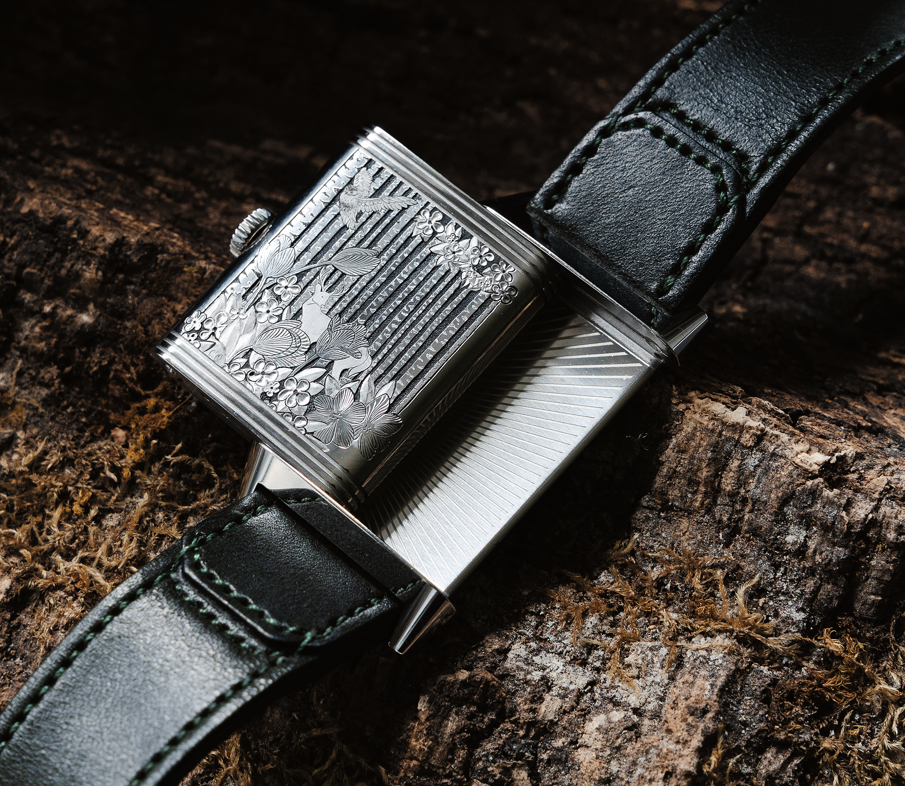
The highly detailed caseback of a Reverso
Next to preparing the tools, engraving is about controlled strength and direction. There are no second chances, so each cut must be executed flawlessly. For this, hand engravers secure the object in an engraving ball vice, which they can angle to any position needed. This is of great importance as they turn the vice with one hand, directing the motion together with the other hand holding the graver.
The work is usually done with the aid of a microscope. Hand engraving is about focusing on what you are cutting as well as what you are cutting out. Especially with specific types of engraving, such as relief engraving, attention must be paid as to which direction the burr that is cut out will go. This is necessary as the burr is sharp enough to damage the rest of the engraving, so it is key to keep the burr away from it.
Different desires can be met with other engraving techniques. In watchmaking, text is the most common. This can be anything from curly initials to an actual message. The best-known example of the latter is the Rolex Daytona Joanne Newman gave to her race-car-driving husband, renowned actor Paul Newman, that was engraved with the text, “Drive carefully, me.” This personal sentiment also helped in achieving a record-breaking US $17,752,500 (fees included) when the watch sold at auction in 2017, with a portion of the proceeds from the sale benefiting both the Nell Newman Foundation (founded by Paul and Joanne’s daughter) and the Newman’s Own Foundation. While personal engravings may increase your emotional connection with a watch, the added value of this is often not shared by the rest of the world unless you are a well-known celebrity.
This is quite different from watches that are adorned with purely decorative engravings. They become part of the timepiece as an art form, often combining different techniques. Engraving is also very much about the reflection of light. The more complex the engraving, the more important it becomes. The finishing is also very important. Shading can be used by deliberately blackening certain parts, but ceramic sticks can also be helpful, as they give a satin finish. A beautiful example of this shading is the Jaeger-LeCoultre Reverso Tribute, engraved by Dutch master engraver Cécile Oorthuis. The closed and reversible caseback is the perfect canvas. As the dial colour of the watch is green, a nature theme was selected. We see a deer peeking at us through a forest of birch trees through which an owl flies, a décor inspired by vintage wrapping paper. Different techniques were utilised to make the scene come to life. They vary from deep relief engraving for the tree trunks, stipple engraving for the space between them, and line engraving for the large flowers. Sometimes engraving is more like sculpting, as was used for the leaves and the tiny flowers at the bottom of the engraving on this Reverso.
This is also a central theme in the eight unique pieces of the LM Split Escapement that MB&F made in collaboration with Master Engraver Eddy Jaquet. Taking inspiration from the world of Jules Verne, the engravings on each are in detail, and a wide variety of techniques ensure the stories come vividly to life.
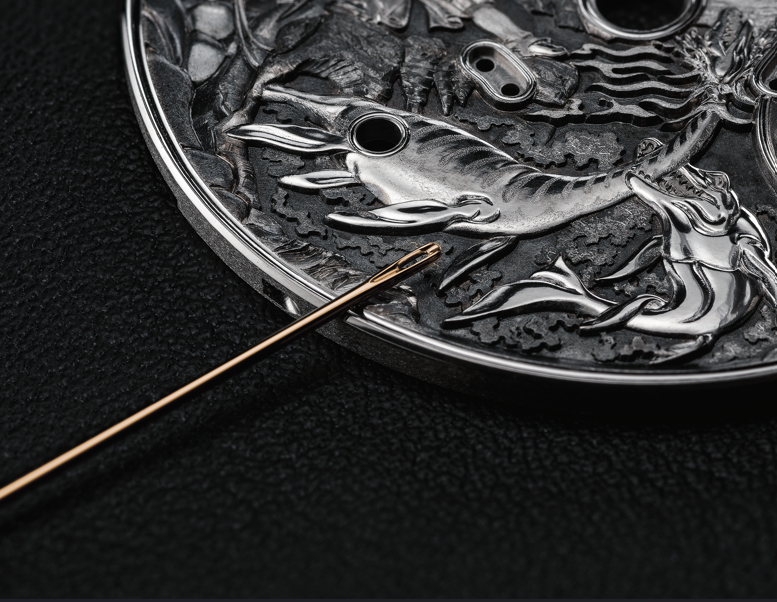
Engraving is making a big effort to create art on a small scale, as with these “pièces unique” of the MB&F LM Split Escapement engraved by Eddy Jaquet
Engraving can also set the stage. Such is the case with the Ref. 6002 Sky Moon Tourbillon by Patek Philippe, which features elaborate hand-engraved volutes and arabesques. This perfectly matches the extremely precise and complex nature of this Patek Philippe, featuring a dial on each side of the case and housing an esteemed collection of complications. The Ref. 6002 Sky Moon Tourbillon even features engraved pink-gold hands, quite a challenge given how thin they are.
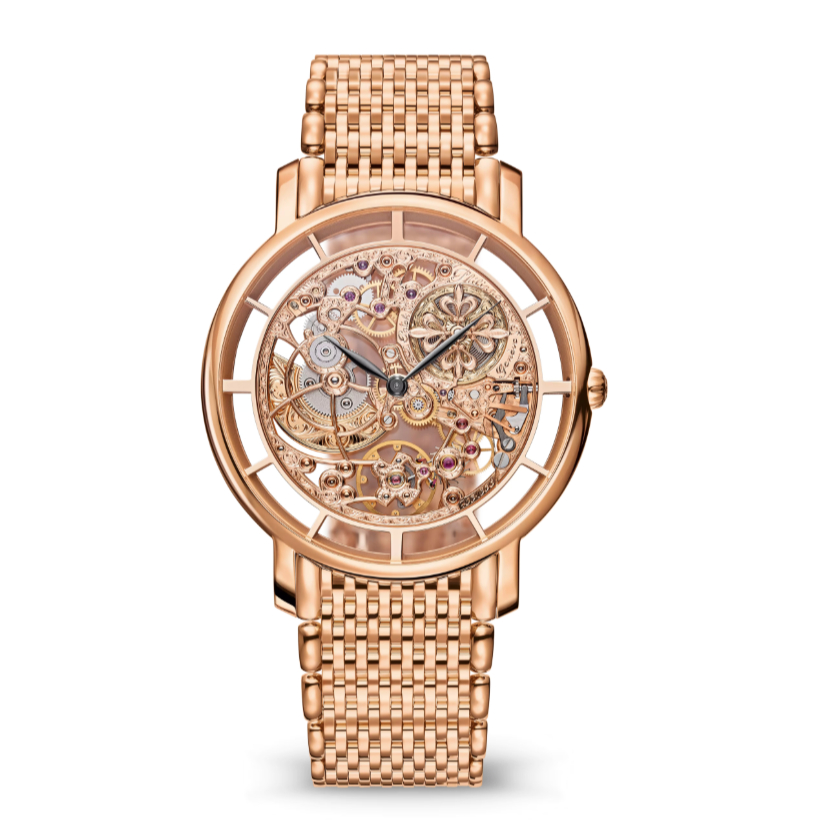
Patek Philippe Ref. 5180/1R
This brings us to another tradition within watchmaking that is unfortunately not commonly practiced anymore: skeletonising and engraving an entire movement. With skeletonising, the bridges and the mainplate of a movement are reduced to the bare minimum. This makes engraving them even more challenging. One of the few watches still available in this category is the Patek Philippe Ref. 5180/1R. The entire case is designed to highlight the legendary ultra-slim Caliber 240 in the middle. The movement is shown in all its refinement, taken to the next level by 130 hours of hand engraving. While the watch only has two hands to tell time, at Patek Philippe it is still part of its prestigious Complications collection, underscoring the true nature of hand engraving as a “métiers d’art.”
Images: Courtesy Brand
This story first appeared in WatchTime India's Watches for Women 2025 issue
Also Read :
Geneva Watch Days 2026: Louis Erard Turns Rye Straw Into a Watch Dial
|
MB&F’s second collaboration with Eddy Jaquet brings forth a new hand engraved limited edition timepiece
|
Hermès turns silk into art with the Arceau Cheval Natté
More In features



Sign up for our newsletters to have the latest stories delivered to your inbox